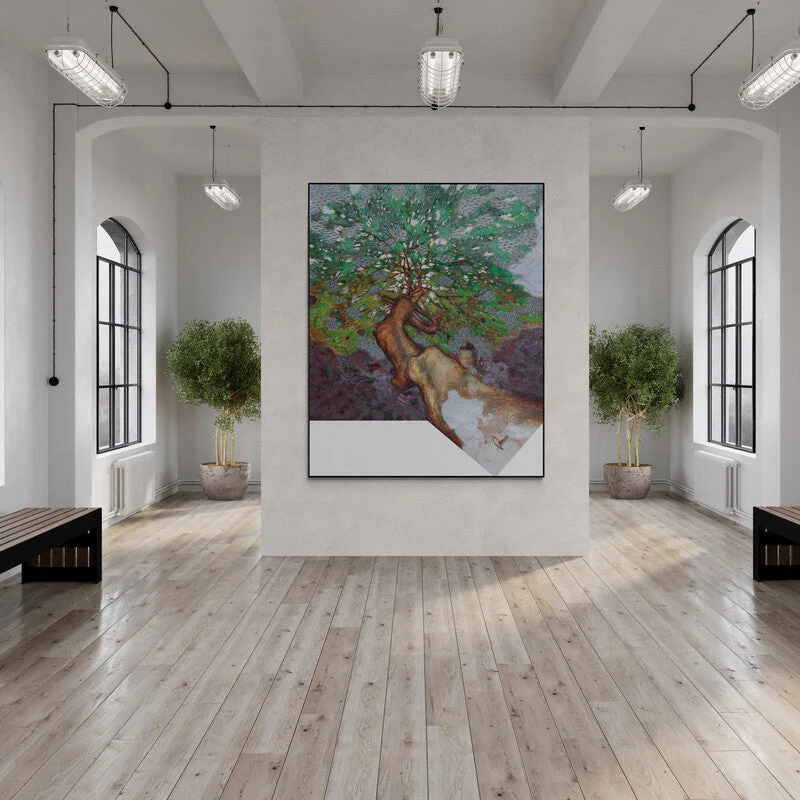

How to Measure and Place
Paintings on Your Wall
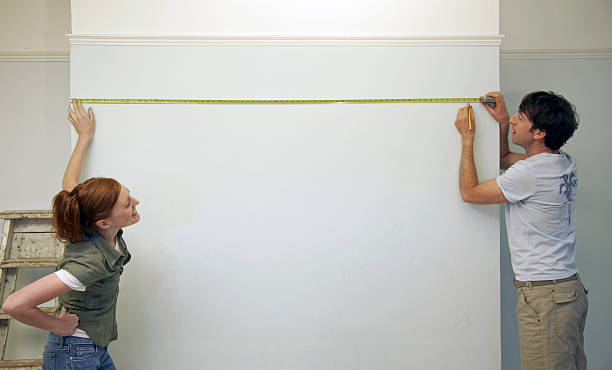
When you’re planning to hang artwork, always start by measuring in inches so your spacing stays consistent. As a general rule, bigger paintings need bigger margins, while small or medium pieces can sit with narrower gaps.
Keeping a balance between the artwork size and the empty space around it helps the wall look neat and intentional rather than cluttered.
Another helpful tip is to lay your paintings on the floor first and arrange them until the spacing feels right—then simply transfer the same measurements onto the wall. This makes it easier to visualize the final look without committing too early. Use painter’s tape to mark edges on the wall so you can see the layout before drilling any holes.
Matching Paintings to Wall Size
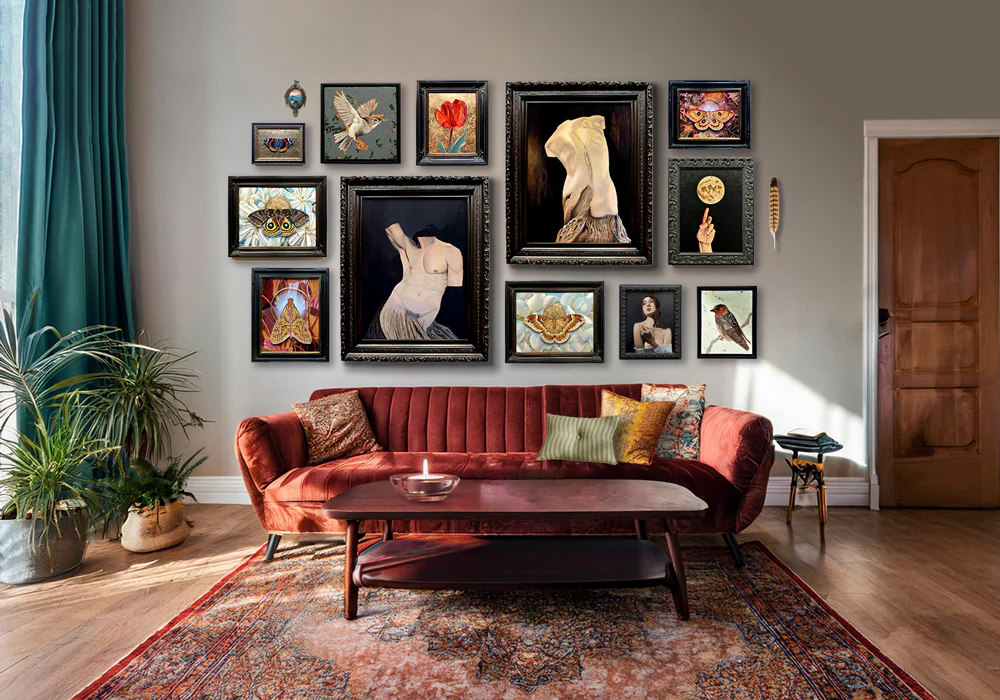
If you have a wide or large wall, you can go for one big landscape painting or arrange 4–5 smaller pieces with equal spacing between them. Measure the total width of your layout first, then divide the remaining wall space into equal margins so everything feels centered and balanced. On small or narrow walls, a single medium-sized frame usually works best.
For wide walls with multiple paintings, try keeping the entire arrangement within the center two-thirds of the wall so it doesn’t look stretched out. If the wall is tall but not wide, you can stack two medium pieces vertically to fill the space without overwhelming it. Think of the wall as a frame—your artwork grouping should sit comfortably inside it.
When to Use Vertical Paintings
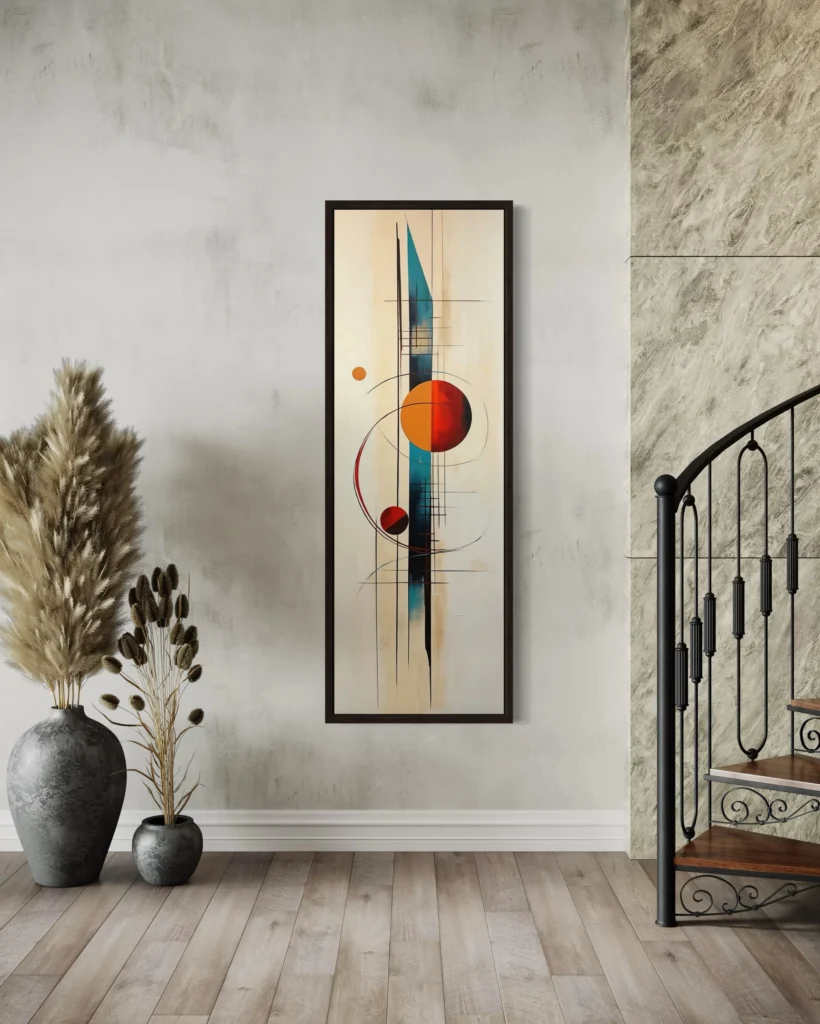
Vertical (portrait-style) paintings look best in tall, narrow spaces, such as beside doorways, near windows, or in hallways. Their height adds visual stretch and makes the space feel taller. If you’re hanging multiple vertical pieces, keep the spacing even—usually 2–3 inches between small frames or 3–5 inches between larger ones.
Vertical pieces also work beautifully to fill empty corners or next to tall furniture like bookshelves or floor lamps. They help continue the vertical line of the furniture and make the whole area feel more connected. If you're mixing vertical and horizontal pieces, place the vertical artwork at the ends to create a natural visual “boundary.”
Common Mistakes to Avoid
Avoid hanging artworks too high—keep the center roughly at eye level (around 57–60 inches from the floor). Don’t mix very large and very tiny frames too closely, as the balance will feel off. Also avoid placing paintings too close to corners, switches, or ceiling lines. Give each piece breathing room so it feels intentional and not squeezed in.
Try not to scatter artwork unevenly across multiple walls in the same room, as it can make the space feel busy. Instead, choose one or two key walls for your main displays. Also avoid hanging paintings where direct sunlight hits them all day—this can fade colors over time and reduce longevity.